Brooketologist

Your Skin Care Guide - KNEW Knowledge Tuesday - If it’s not Tuesday…you’re early. Come back for the most recent glow-up💛
What Makes a Balm Different From a Moisturizer?
When it comes to skincare, the terms balm and moisturizer are often used interchangeably. While both can help keep skin feeling soft and comfortable, they serve different purposes and work in different ways.
Understanding the difference can help you choose products that better support your skin’s needs, especially if you’re dealing with dryness, sensitivity, or a compromised skin barrier.
First, What Is a Moisturizer?
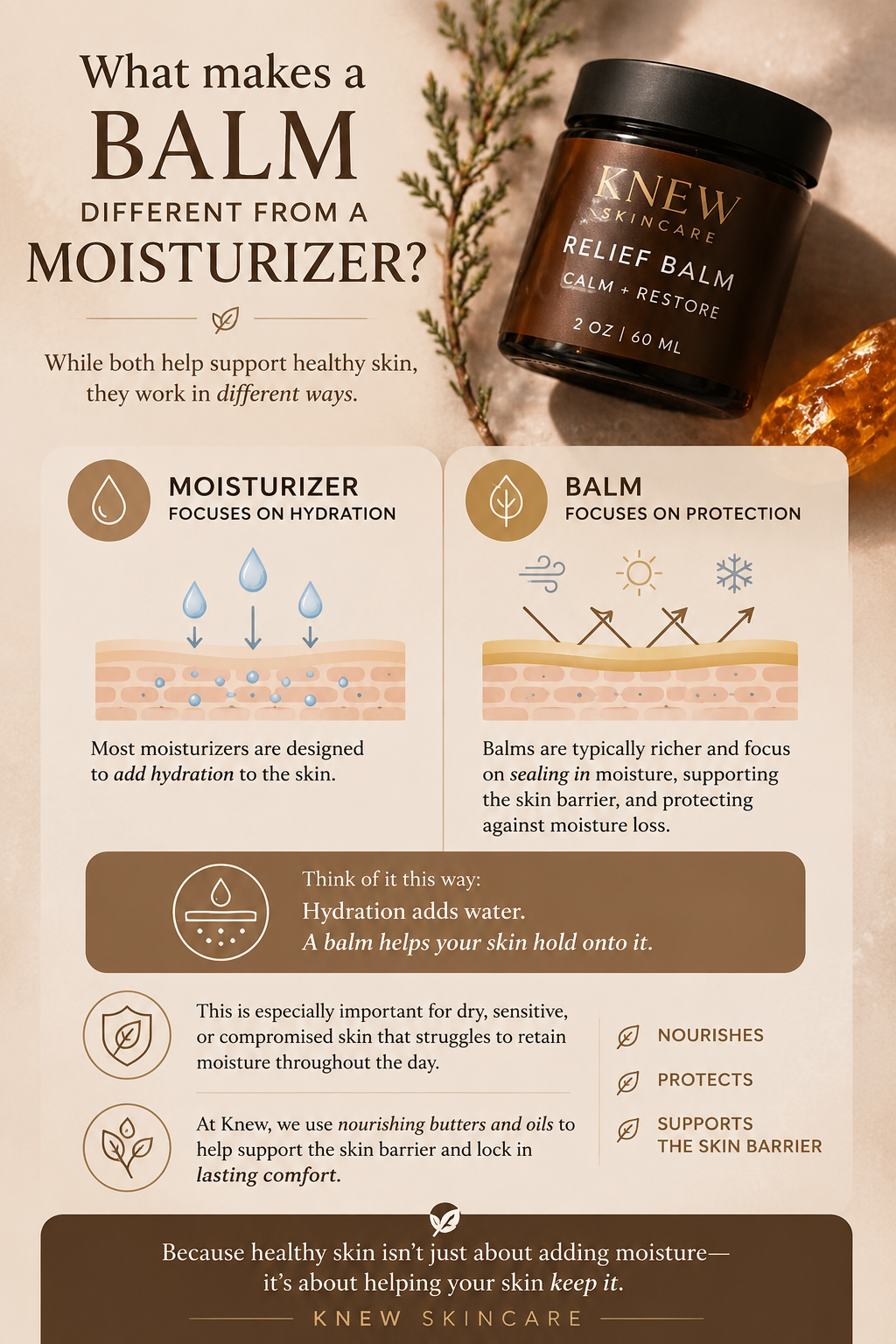
A moisturizer is designed to help increase and maintain hydration in the skin.
Many traditional moisturizers contain:
Water
Humectants (ingredients that attract water)
Emollients (ingredients that soften skin)
Their primary purpose is to help the skin feel hydrated and comfortable.
Moisturizers are often:
Lightweight
Quick-absorbing
Easy to layer
For many people, moisturizers are the first step toward improving dry or dehydrated skin.
What Is a Balm?
A balm is typically richer and more concentrated than a traditional moisturizer.
Balms are commonly made with:
Butters
Oils
Waxes
Barrier-supporting ingredients
Instead of focusing primarily on adding hydration, balms focus on helping the skin retain moisture and protect the skin barrier.
The Difference: Hydration vs. Retention
One of the easiest ways to understand the difference is this:
Moisturizers help add hydration.
Balms help keep it there.
Think about watering a plant.
Watering the plant provides hydration.
Adding mulch around the soil helps keep that moisture from evaporating.
A balm works similarly by helping reduce moisture loss and supporting the skin’s protective barrier.
Why the Skin Barrier Matters
Your skin barrier is responsible for:
Keeping moisture in
Protecting against environmental stress
Reducing irritation
Maintaining healthy skin function
When the barrier becomes weakened, skin may feel:
Dry
Tight
Sensitive
Irritated
Even if you’re using hydrating products, moisture can escape more easily when the barrier isn’t properly supported.
This is why hydration alone isn’t always enough.
When a Balm Can Be Especially Helpful
Balms can be beneficial for:
Dry skin
Sensitive skin
Mature skin
Seasonal dryness
Areas prone to irritation
Supporting a compromised skin barrier
Many people find balms particularly helpful during colder months when moisture loss tends to increase.
Can You Use Both?
Absolutely.
In fact, many skincare routines benefit from both hydration and moisture retention.
A simple approach might look like:
Start with hydration (such as damp skin after cleansing or showering)
Apply a balm to help lock in that moisture and support the skin barrier
This combination can help create longer-lasting comfort and support healthier-looking skin over time.
The Knew Approach
At Knew, we believe healthy skin isn’t just about adding moisture, it’s about helping your skin keep it.
That’s why our approach focuses on:
Nourishing butters and oils
Barrier support
Moisture retention
Simple, intentional skincare
Applied to damp skin, rich butters and oils can help seal in hydration already present while supporting the skin barrier for long-lasting comfort.
Final Thoughts
Both moisturizers and balms have a place in skincare.
Moisturizers help provide hydration.
Balms help protect, nourish, and support moisture retention.
The goal isn’t choosing one over the other, it’s understanding what your skin needs and giving it the support it deserves.
Because healthy skin isn’t just about adding moisture.
It’s about helping your skin hold onto it.